
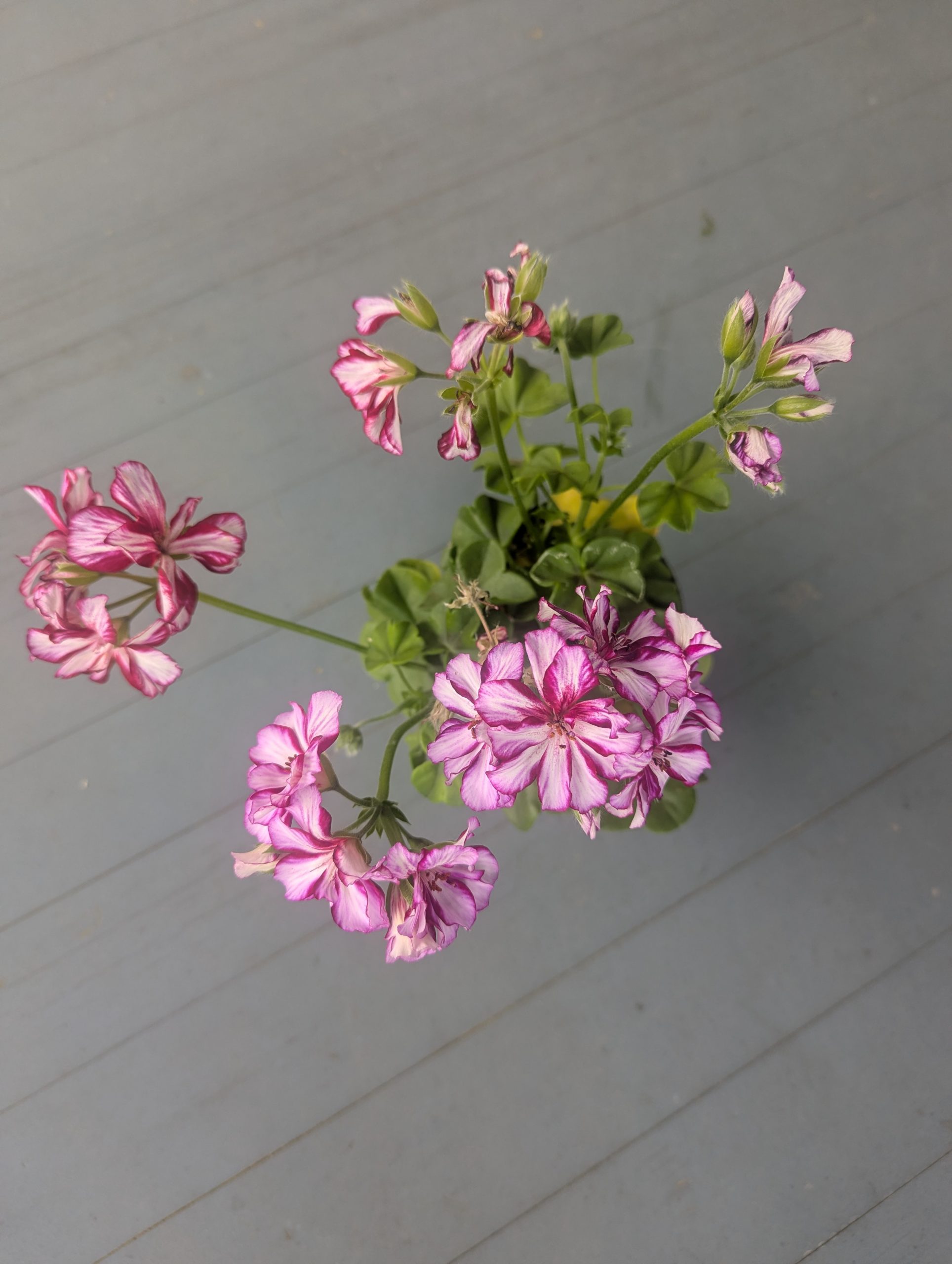
 It is almost axiomatic that children tend to rebel in some way against their parents. The offspring of nonconformists buy houses in the suburbs and fret about their perfect lawns. Children of traditionalists pursue alternative lifestyles in ways guaranteed to alarm their parents.
I rebelled with geraniums—specifically hardy geraniums. I came from a family that held traditional red geraniums, known botanically as Pelargonium x hortorum, in high regard. My father filled containers with scarlet geraniums every Memorial Day weekend, as did most of his neighbors. That weekend, they also decorated graves in the local cemeteries with the plants, adding little American flags for the veterans.
It was a lovely tradition, and I wish I lived close enough to do the same for my parents. I think the local Scout troop still takes care of the flags.
When I started gardening, I decided that those traditional geraniums were too gaudy and ephemeral for my taste. After all, they might be glorious in the spring, summer and early fall, but had to be brought inside when frost loomed in October or left outside to die ignominiously. I turned my horticultural attentions to hardy geraniums, those perennial pelargonium relatives that are generally less showy, but last in the garden.
My garden is now full of them, and I love them all, from brilliant blue ‘Rozanne’ that weaves its way through perennial borders to ‘Biokovo’, with its winsome white flowers and scarlet fall leaves. Each year I add a few more because they are both lovely and useful.
True to form, my daughter rebelled by becoming an enormous fan of traditional pelargoniums. Though she does not care much for the scarlet beauties that my father loved, she assembles containers full of lush pink double geraniums or red and white awning-striped varieties. The hardy types do nothing for her.
But my daughter’s geranium rebellion triggered something in me, and I began to see traditional geraniums in a new light. Now I buy them in spring when the garden centers first put them on the pallets. A red and white awning-stiped variety is currently sitting in my plant holding area waiting for me to plant it in a container and provide its moment in the sun. A couple of last year’s unusual specimens are still on the dining room window seat, having survived the winter, albeit grudgingly. They will go outside over the weekend, spending a bit of time in a protected place on the back porch before joining the other geraniums in the sunshine.
The common geranium has gone in and out of fashion since its arrival on the horticultural scene, and the ensuing craze for the plants that happened during the late Victorian period. Geraniums returned to vogue after the Second World War and really took off after Penn State professor Richard Craig bred ‘Nittany Lion Red’, a seed-raised pelargonium that was a forbearer of the modern bedding geranium.
These days, of course, we can obtain Pelargonium x hortorum just about everywhere, along with some of its relatives, like the regal or ‘Martha Washington’ geraniums, not to mention ivy-leafed, scented-leafed and fancy-leafed varieties.
Specialty websites offer even more choices. I am smitten with geraniaceae.com, which offers a staggering array of pelargoniums, hardy geraniums, and other members of the geranium family. You can order the “Angel and Pansy Face” pelargonium ktypes, which are just what you would imagine, with petals dashed and splotched with contrasting colors. They also carry an abundance of the “Regal” or “Martha Washington” geraniums, which are especially large and showy. Overall, the geraniaceae.com geraniums are sufficiently lovely to warrant overwintering them on south-facing windowsills.
Most pelargoniums respond best to sunny situations, well-drained soil, and supplemental moisture during dry spells. They tend to be heavy feeders, so fertilize with an organic, general-purpose fertilizer applied according to manufacturers’ directions. If plants get “leggy,” prune them back by about one third after flowering.
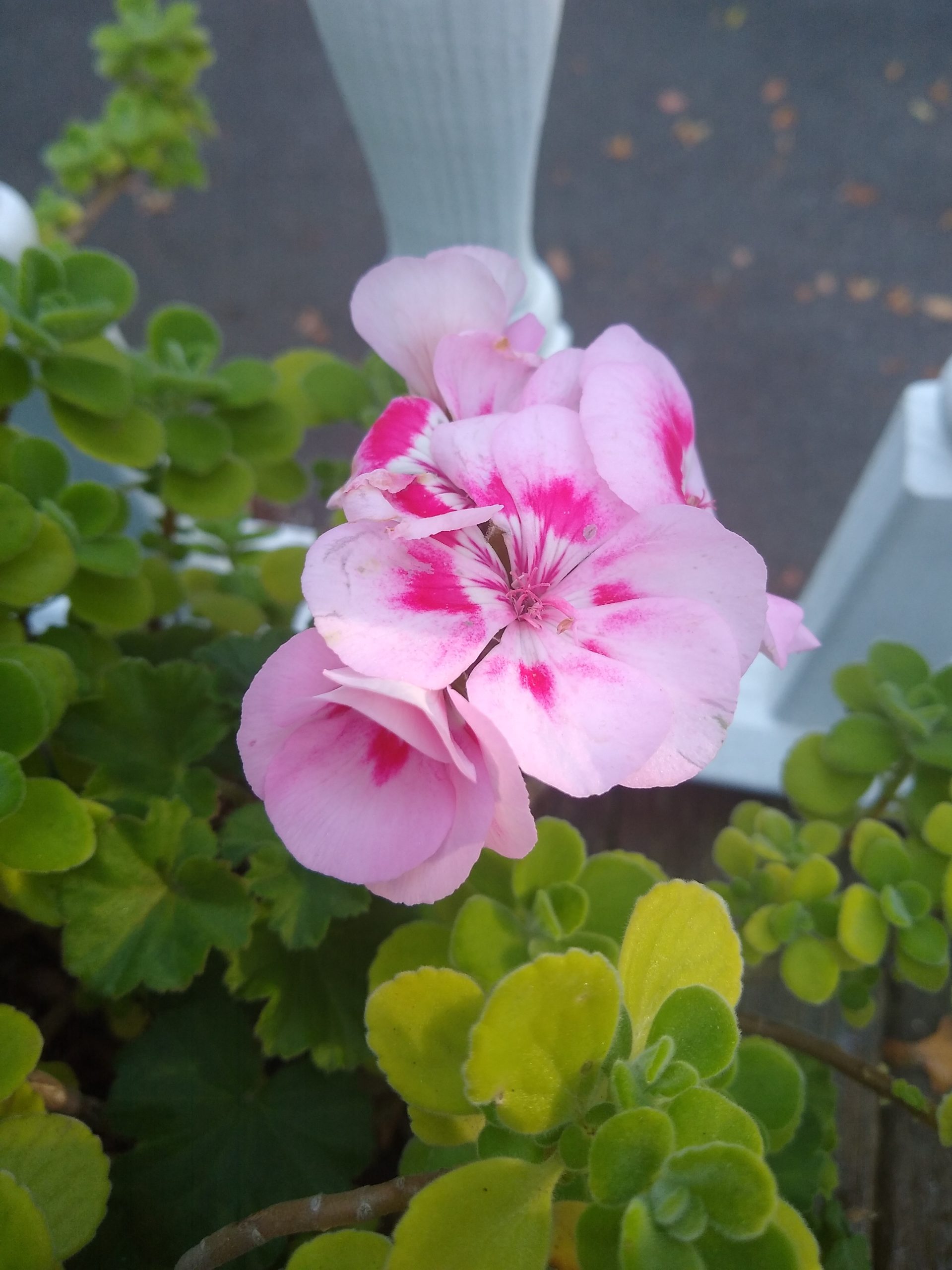 My rebellion against pelargoniums and my daughter’s rebellion against hardy geraniums proves that given time, everything comes back around. Beauty is what really matters.