
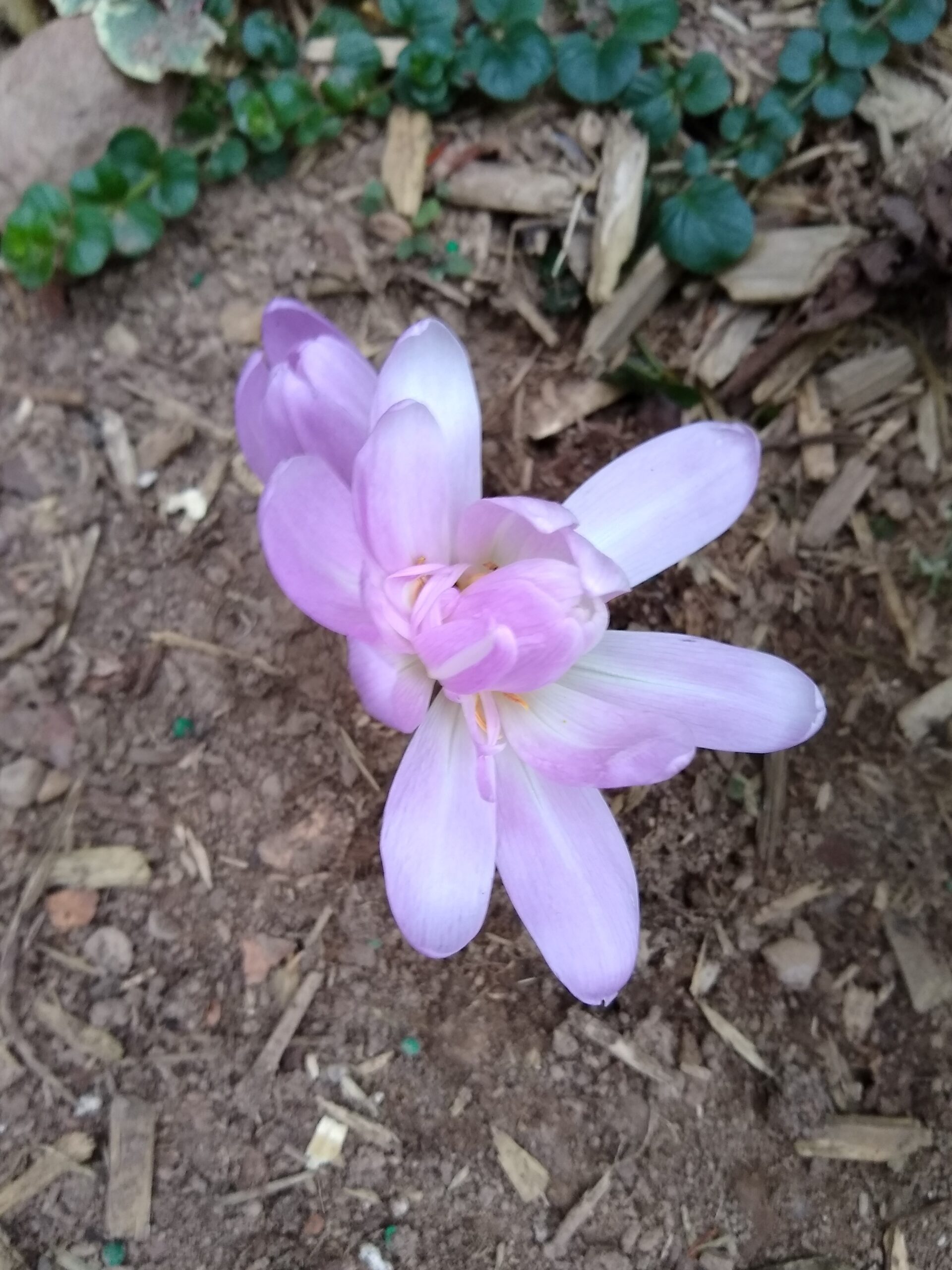
 When the entire world is turning upside down, as it appears to be doing right now, it is essential to take a mental break and focus on the little things that provide joy and diversion. Crocuses fit nicely into that category. Fall-blooming crocuses are open for business now and they are a sight for the weary fall gardener’s eyes. . Colorful, and still relatively cheap these little beacons bring something special to the fall garden. Not everyone grows them, but everyone should. The bulbs are small, and I tend to plant them in the midst of ground covers like ivy or vinca, which help support their slender stems. They are equally happy planted around the edge of a vegetable garden, to provide hope and color as you harvest the last of the tomatoes. You can also use them to fill holes in beds and borders, or plant them in pots. The important thing is to buy any that are still available and/or mark your calendar for next August or early September and plan to get your hands on some fall crocuses.
The resemblance is not readily apparent, but fall blooming crocuses are members of the large and varied iris or Iridaceae family. In size, shape and color, many of them look almost exactly like their spring-blooming relatives. The flowers are larger than the little snow crocuses that appear first in the spring, but smaller than the Dutch giants that come along later. The colors include shades of purple, blue-purple, pearl gray and white. Native to the Mediterranean and Central Europe, fall crocuses like sunny spots, but can make do with light shade. Once in the ground, they will live happily for years and even multiply if left undisturbed.
Perhaps the most beautiful of the fall bloomers is Crocus speciosus, which is bright blue purple with orange stems. In the early fall sunshine, its six large petals open wide. The leaves come later, making the unadorned flowers seem truly miraculous. In addition to the species, there are several varieties available commercially, including the white-flowered ‘Albus;’ large, bright blue ‘Conqueror;’ and the large lavender ‘Cassiope.’
Speciosus crocuses make a good complement to Crocus pulchellus, a native of Greece, Turkey, Macedonia and Bulgaria. It loves damp places but will do fine in ordinary garden soil. Pulchellus is lighter in color than speciosus–lavender to pearly gray with prominent darker purple veins. For a good show, interplant them in groups of five, seven or nine. Crocuses and Nature love uneven numbers.
Admirers of yellow crocuses will find a void among the available fall-blooming species and varieties. Fill the void with Sternbergia lutea, which is not a true crocus, but a crocus look-alike from the amaryllis family. Sternbergia grows from a bulb, just like crocuses; reaches about six inches tall, just like crocuses, and blends in with crocuses as if they were all part of the same big, happy family
I am intrigued by a crocus with a wonderful name–Crocus hadriaticus. I presume this is after the Roman Emperor Hadrian, who ruled in the first and second centuries AD, and was responsible for building Hadrian’s Wall, which marked the Roman Empire’s northern boundary. Hadrian had a love of all things Greek and fittingly, the hadriaticus species is native to western and southern Greece. Like the emperor, hadriaticus is big and showy. According to Anna Pavord in her comprehensive work, Bulb, the species can produce up to five flowers from a single bulb. This is good value for the money. Like many things of good value, hadriaticus is not widely available, but it is worth seeking out online. As with many crocuses, it will increase over time.
All of us who plant bulbs have to worry about predatory animals that will dig up our bulbs and eat them, or simply toss them around. Squirrels will sometimes disinter bulbs and take the trouble to re-bury them, resulting in something my family calls “squirrel landscaping.” If you find single crocuses or other bulb plants lying unattended on garden paths or sprouting in places where you know they were not planted, you too have probably been targeted by squirrel landscapers. Their aesthetic sensibility eludes me, but they don’t care what I or any other human thinks.
To stymie digging or burrowing animals, cover freshly dug earth with screening or wire mesh for the first week or so after planting. I also sprinkle the ground with red pepper flakes, lavender stems or perilla mint leaves. For problematic burrowing pests, Scott Kunst of Old House Gardens has always recommended planting bulbs in the ground in soil-filled pots topped with chicken wire. The crocuses grow through the wire mesh, but the burrowing and tunneling creatures can’t get to them. Spray new growth with one of the widely–available repellent sprays, repeating the treatment after rainstorms. All of this may seem like a lot of effort, but it is worth it to have a renewable source of fall color.
It is also fun to hear the local dogwalkers say, “Wow—crocuses in October. The climate is really messed up.” Yes, the climate is messed up, but not so messed up that autumn crocuses cannot put on their annual show.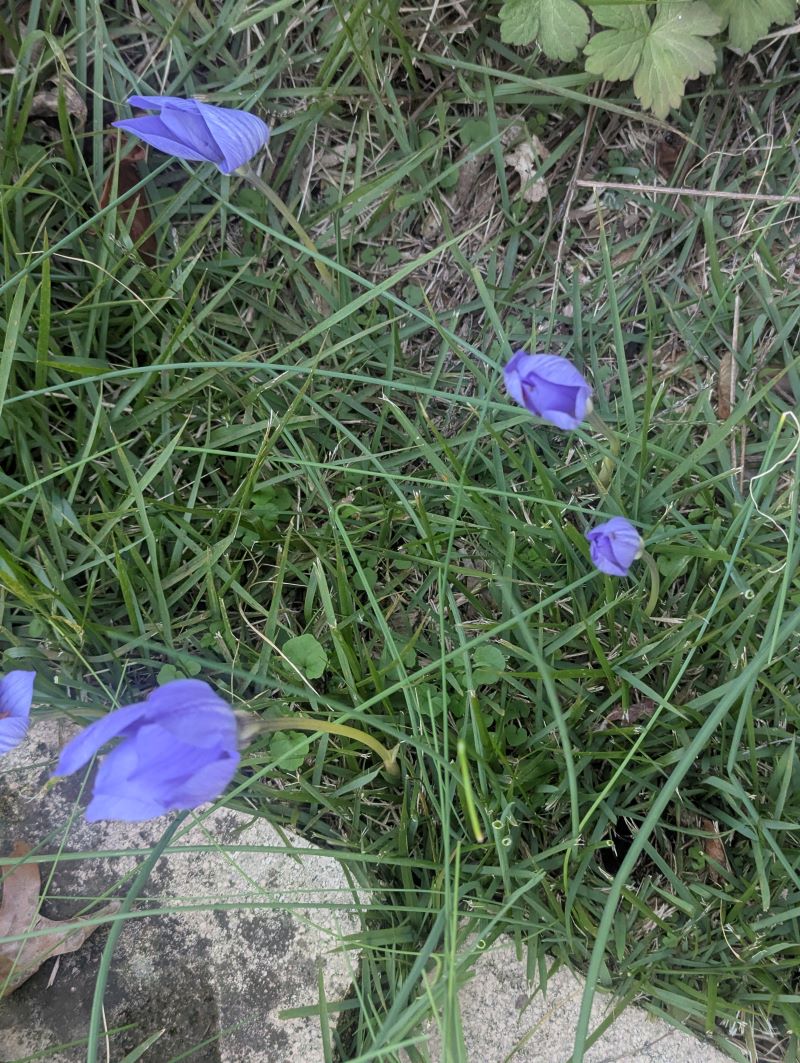
*