
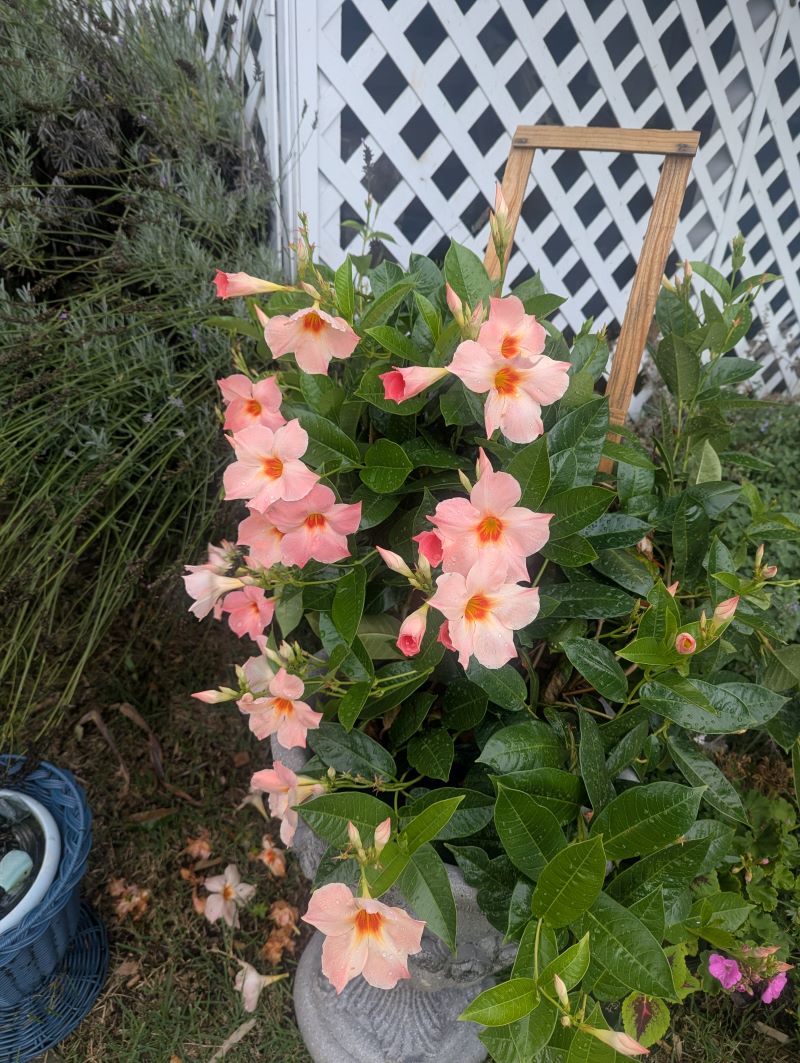
Once upon a time, plant merchandisers offered only one mandevilla variety, ‘Alice Dupont’, known to botanist friends as Mandevilla x amabilis ‘Alice Dupont’. Cultivated and studied for 30 years at Longwood Gardens, home of its wealthy namesake, ‘Alice Dupont’ was officially named and introduced to the world in 1960. The original Alice and her husband, Pierre, did not have any children, but the descendants of ‘Alice Dupont’ are alive and thriving in all corners of the horticultural marketplace.
The world is full of mandevillas, with about 180 species native to locations ranging from the American southwest, through Mexico, Central America, and South America. ‘Alice’ and her commercial mandevilla relatives are at least partially descended from species native to Brazil, but their lineage is complicated, involving multiple species.
With an evergreen disposition, woody stem and a twining, vining habit, commercial mandevillas, including ‘Alice Dupont’ can grow anywhere from three to 10 feet tall. They are tropical plants, hardy only in USDA plant hardiness zones 10 and 11, so the majority are either grown as annuals or overwintered inside. When cultivated in containers and brought in for the winter, they will probably reach only three feet—tall enough for a trellis or support, but not unwieldy.
Mandevillas are part of the Apocynaceae or dogbane family, which is also home to familiar garden plants like vinca, and asclepias, better known as milkweed. Small vinca blooms with their five petals joined into a tube at the base, most closely resemble the structure of the mandevilla flower. Mandevilla blooms are larger, at three to four inches across, and more trumpet shaped, with longer central tubes. The leaves are oblong and somewhat rugose or wrinkled and may be up to eight inches long. Like milkweeds and other dogbanes, the stems exude milky sap when cut, and that sap may be irritating to skin. Gloves are in order if you are pruning mandevillas.
Modern ornamental plant breeding is all about “more”—more color, more size options, more versatility, and increased vigor. This is true of mandevillas, which have been extensively bred and hybridized. Suntory, of Japan, originally well known as a distilled spirits company, has also become a major player in the horticultural world through its Suntory Flowers division. In 2003, the company introduced the first plants in the Sun Parasol series of mandevillas. Further introductions followed, and now the average consumer can buy mandevillas bearing blossoms in pink, red, yellow, apricot, white and plum shades.
The Sun Parasol Giant series features plants with extra-large leaves and flowers, and includes Sun Parasol Giant ‘Marbled Crimson’, with bright red flowers and foliage edged in white. Plants in the Pretty series feature smaller leaves and increased flower production over the growing season. The Garden series includes more compact plants with a branching, rather than vining habit that makes them suitable for use in garden bedding and hanging baskets. Suntory introductions also include plants with double flowers and the patriotically named ‘Stars and Stripes’ featuring red petals striped in white.
Not to be outdone, Monrovia, the large American plant wholesaler, has developed the Sunvilla mandevilla series in white, pink and red-flowered varieties, including one with larger than average flowers called ‘Giant Red’. Proven Winners, which has a strong presence in the garden center trade, offers a selection of the Sun Parasol plants, plus another series called Bombshell that originated with the German company Syngenta.
These days many popular plant species are marketed in series form with one name covering several varieties that are differentiated by color and sometimes other traits. I can’t decide if this trend makes it harder or easier for the consumer. It is certainly a boon to wholesalers, retailers and marketers. The best advice for gardeners who want to grow mandevillas is to look for a color, size, and growth habit that fits your taste and planting scheme, check the label for its mature dimensions, and hand over your credit card.
In the ground or in containers, mandevillas like sunshine or very light shade, with afternoon shade preferable in warmer climates. During the growing season, keep the soil consistently moist and feed regularly with an organic plant food, applied according to manufacturer’s directions. If you choose to bring the plant inside when night temperatures dip to 50 degrees Fahrenheit, provide it with bright indirect sunlight, and let the soil dry out between waterings. Cut the plant back before you bring it outside in spring.
The human Alice Dupont was a tastemaker in her day. It is nice to think that her namesake plant started a mandevilla revolution that shows no sign of letting up.