
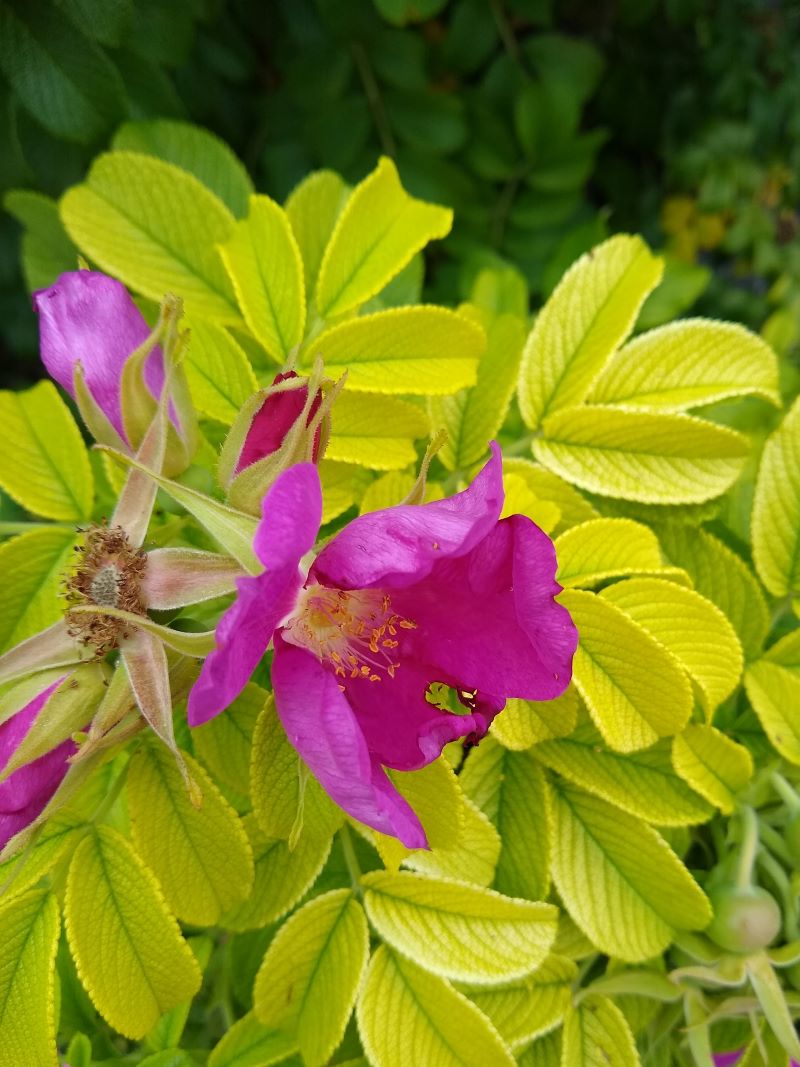
 In the aftermath of World War II, roses, loved for millennia by gardeners, artists, and everyday people, became divas. The hybrid tea rose, with its long stems, plump buds, and opulent petal configurations, reigned supreme in American gardens. People, including my rose-loving father, planted his first garden with peachy-pink ‘Peace’, blood red ‘Mr. Lincoln’, and pristine white ‘John F. Kennedy’. Dedicated rose gardens sprouted in public parks and private backyards. The future looked as bright as an orange ‘Tropicana’ rose.
But there was trouble in rose paradise. Like all divas, the hybrid teas required lots of attention. In the pre-internet days, books and magazines were filled with articles about their care. Gallons of ink was expended in the name of good rose culture, which, according to the experts, included ample supplemental water in most places, regular feeding, and lots of artificial pest and disease protection. Companies made millions on chemicals that would dispatch aphids, Japanese beetles, black spot and powdery mildew. Home landscapes may have been filled with pristine hybrid tea roses, but the adjacent garages were chock-a-block with brown or green bottles from manufacturers like Ortho.
By the last decades of the twentieth century, gardeners’ love affair with the hybrid teas was on the wane. Ecological concerns surfaced, and some home growers, intimidated by the divas’ requirements, gave up on roses. English breeder David Austin strode onto the international rose scene with his new “English roses”, which combined the beauty of older generations of roses with added vigor and disease resistance. That combination was a winner, and other rose growers began introducing similar “old-fashioned” type roses with the same traits.
In the meantime, ideas about rose care evolved. Gardeners began experimenting with integrated pest management, eliminating chemical treatments in favor of letting birds and other pest predators dispatch the aphids and Japanese beetles. Good practices, like promoting air circulation and tolerating some disease incursion, took hold. Some hybrid teas proved less diva-ish and more resilient than previous generations of gardeners would have believed. Many of the new “English Roses” and their look-alike relatives bred by French, German, English and American hybridizers did just fine.
Now I find myself in the midst of that modern rose landscape, and in the market to replace some old roses that have dwindled in health and beauty with new ones that will perform well going forward. I will look at the Austin varieties, of course, because some, like the high, wide and handsome ‘Golden Celebration’, have done phenomenally well in my garden over a long period. I still long for a ‘Peace’ rose, because it was my father’s favorite, and is gorgeous when well grown. I hope that a new ‘Peace’ specimen will have been bred for better hardiness. It will be a gamble, but one that is worth taking. I am also interested in Rosa mutabilis, a single-flowered variety that changes color as it ages and is known for toughness. The mutabilis shrubs planted in New York City’s High Line seem to weather the wind and elements well. I grew one in my garden for years, but it succumbed to rose rosette disease and had to be removed. The nature of that incurable ailment means that I cannot plant another rose in the same place. A new mutabilis will have to hold court in a location removed from the original site.
Rose rosette disease will not be my only worry when it comes to replacing the dwindling older shrubs. Garden wisdom has long suggested that a rose planted in the same space as an older, departed shrub will not thrive. Since my space is somewhat limited, any rose replacement job will involve removing the soil in which the old variety was planted and replacing it with fresh, healthy soil. This will involve more digging that I would like but will help ensure greater success.
I am convinced that the results will justify the labor. As I page through the catalogs and websites, I have pinpointed at least 50 roses that make my heart sing. Buying those fifty roses would make my pocketbook shriek, so considerations of available space and financial constraints will guide the choices. The selection process is still in progress, but by next summer, I am hoping for a rejuvenated array of roses, strategically placed among the perennials, annuals and shrubs. My goal is to provide abundant color and scent, even when the world seems gray and confused. To get the ball rolling as I wait for winter to subside, I am already negotiating with the blue jays about pest control.