 Back in the seventeenth century, the word “cockscomb” was used to describe a person, generally male, who was foppish or overly preoccupied with his appearance. The term is so descriptive that it is a shame that it has fallen out of use. “Cockscombs” walk among us still. The word was originally used to describe the red ruffled growths on the heads of roosters. I am sure that those historical “cockscombs” probably strutted around like the kings of the barnyard, hence the association.
I occasionally read about seventeenth century cockscombs, but don’t have much day-to-day association with roosters. The cockscombs that I see are of the plant variety, and star in the late summer and early fall garden.
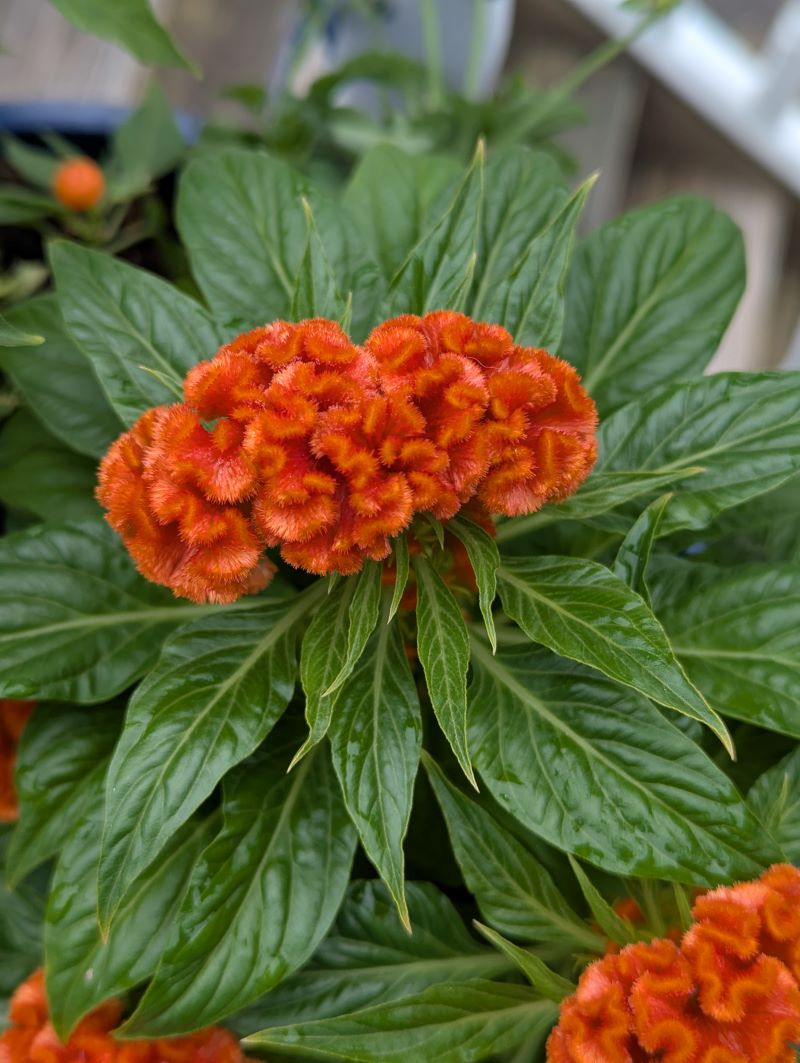
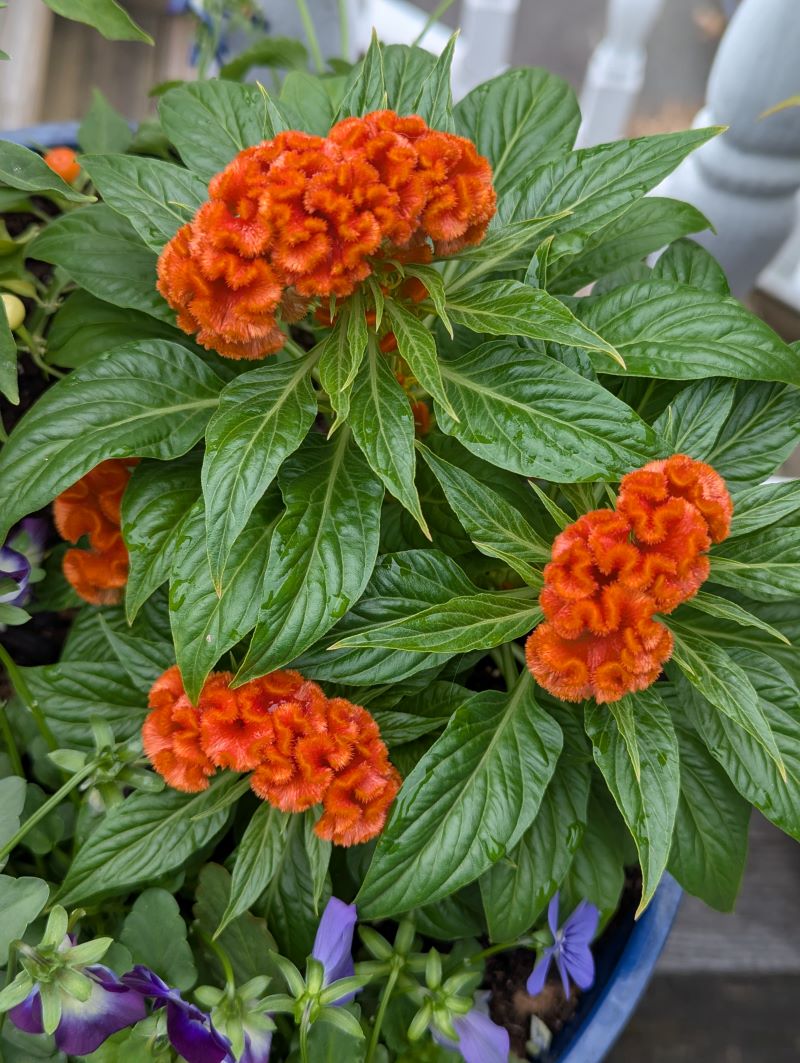
Cockscombs are known botanically as Celosia argentea, and the plants that sport flowers resembling chickens’ topknots are part of the species’ cristata group. Also sometimes called “crested celosia”, they are tender annuals that grow up to two feet tall bearing velvety flower heads, lobed and whorled so that they look a little like human brains. The flowers are most often red or orange in my part of the world, but may also shine in shades of yellow, purple and pink. Flaunting their charms from garden center pallets, cockscombs almost beg to be touched.
Celosia in its various incarnations is part of the Amaranthaceae of amaranth family, a useful clan that is native to the Americas and also contains species that have been used for culinary, medicinal, and fabric dying purposes for centuries. The plants have been grown in the United States since colonial times and were mentioned by Thomas Jefferson in 1867. Lovers of old fashioned annuals have been attracted by the crested celosia’s combination of beauty, sculptural qualities, and utility as both a dried and fresh ornamental. More recently breeders in other countries have applied themselves to the task of creating improved cockscombs, like the Japanese-bred Kurume™ series that includes the beautiful yellow and red-dappled ‘Corona’.
I did not warm to cockscombs for a long time, but my daughter, who has deepened my appreciation of an array of plants from pelargoniums to colocasia to lithops or living stones, helped me on my journey to appreciation. Since childhood she has had a fascination with tactile plants, like silvery lambs’ ears or Stachys byzantina. Cockscombs are right up her alley, and thanks to her a lovely orange one is currently adorning the back porch. I may try growing some from seed next spring.
Like many heirloom plants, cockscombs are fairly easy to grow. They like warm soil, so the seeds should be started indoors about one month before the last spring frost date, or installed in garden beds or containers once the soil has warmed up. You can make that determination by holding a clump of soil in your hand. If it is cold to the touch, it is not warm enough for celosia seeds. Sunshine is a must, as is good drainage. Plants languishing in wet, clay soil are prone to root rot. Provide consistent moisture while the seedlings are establishing themselves, but once established, thriving celosia can tolerate dry spells.
The range of choices is large. ‘Golden Queen’, with its fat, whorled flowerheads, is characteristic of Japanese Kurume-type varieties. ‘Mad Magenta’ boasts flaming flowerheads, with the added bonus of young leaves that can be eaten or dried and brewed into a pink-hued tea. I cannot vouch for the flavor of the tea, but the flowerheads are so large that one or two stems will fill a small vase. For something completely different, try ‘Red Raven’, with leaves so dark that they appear almost black, and flashy red “combs”.
If you have trouble deciding on color, or want to experience a range of celosia hues, seed vendors also carry cockscomb mixes, like the low growing—14 inches tall–‘Jessica’s Mix’, with huge flowerheads in all of the cockscomb colors.
Crafters have long been fond of cockscomb for dried arrangements, wreathes and other decorative purposes. If you have grown them in the garden, or purchased full-grown celosias, cut stems early in the day and place in water for a few hours. Bundle stems together, secure with a rubber band, and hang upside down in a warm, relatively dark, well-ventilated place. Within a few weeks, the stems will shrivel somewhat, and the flowers will be dry. Colors may either fade or darken, depending on the original color and variety.
My newfound appreciate for celosias proves once again that there is always something to learn in and out of the garden. Celosias have brought me brightness.