
 There is no doubt about it. Sedums, sometimes also known as “stonecrop” are having a moment. The moment has been facilitated by all kinds of factors—explosions in plant breeding, the demand for easy-care plants, the trend towards global warming, and increased awareness of the overall utility of this large plant family.
There are at least 280 species of sedum, distributed over northern temperate regions of the world. The tall ones like ‘Autumn Joy’ and, ‘Matrona’ are the best known, but there are many shorter sedums on the market, including some that are small and sprawling enough to be used as ground covers. Low growers are in their glory everywhere, from green roofs to rock gardens.
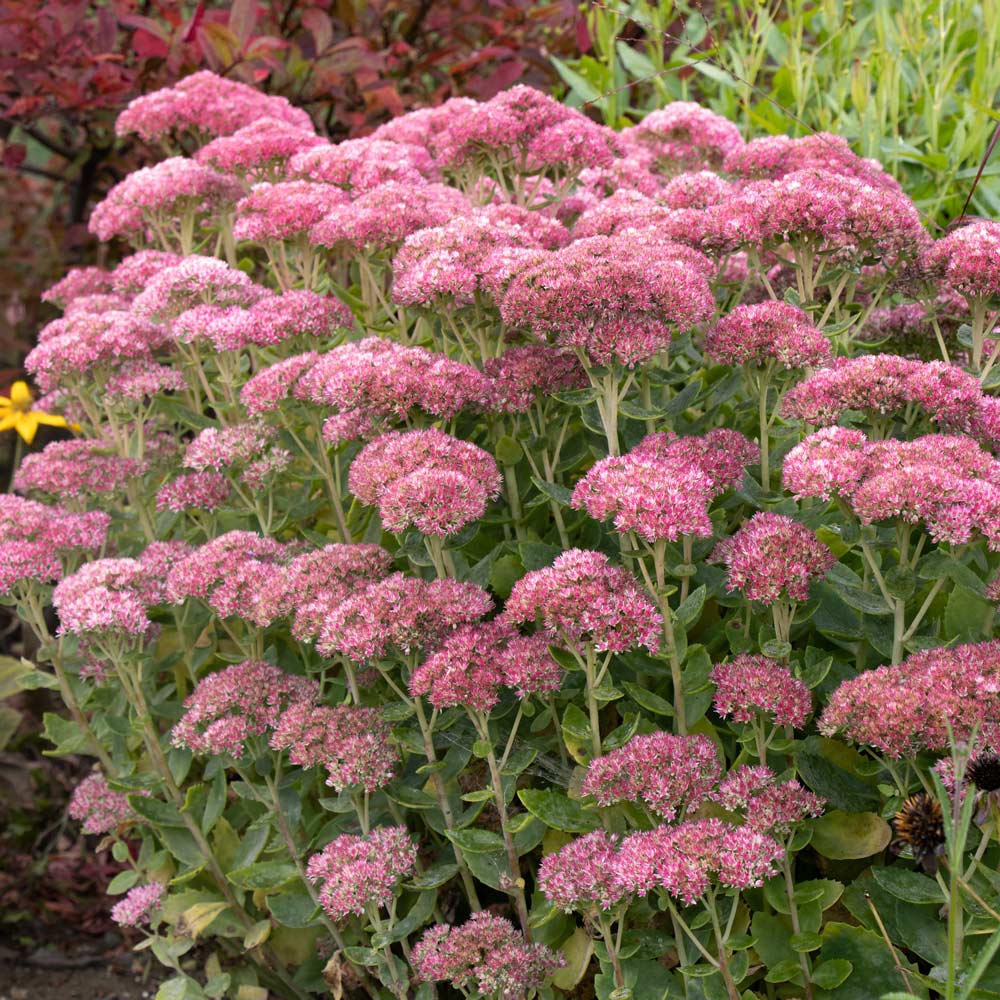
The flowerheads on ‘Autumn Joy’, which I have grown for years, are now making the transition from pale green to pale pink. That color transformation process will continue over the course of the fall, until each tiny flower is dark red. If I leave the flowerheads in place over the winter, they will turn brown while maintaining the sculptural quality that provides winter interest in the depleted garden beds.
The clumps of ‘Autumn Joy’ in my garden, which used to be known botanically as Sedum spectabile, have no idea that several years back plant taxonomists gave them and related tall cultivated varieties and hybrids a completely new name—hylotelephium. To my mind the new name sounds less like a plant and more like a telecommunications company. Vendors and gardeners alike still class these medium to tall succulent plants, which grow anywhere from eighteen to twenty-eight inches high, as “sedums”.
To add to the confusion, many low growing “sedums” are now classified as “phedimus”. They will also most likely continue to reside in the nursery section labeled “sedum”.
‘Autumn Joy’ and its tall relations feature sturdy stems; large, flat-topped flower clusters and ovoid leaves with edges that might be smooth, lightly serrated or downright toothy. The leaves will remind you of jade plants, to which sedum are related within the larger Crassulaceae family. Like jade plants, sedums boast thick stems and flat, fleshy leaves that store water efficiently making them the camels of the backyard menagerie. The plants need little or no supplemental irrigation in dry weather, and, in fact, you can find out whether your sedum or jade plants need water by feeling the leaves. If the leaves are plump and firm, the plant has enough water. If they are thin and relatively flaccid, the plant is thirsty.
All the tall sedums bloom in late summer to early fall, with flowers that start out greenish white to pink and mature to various shades of pink, red and purple according to variety. By choosing from an array of online and traditional retailers, you can locate a number of tall varieties, including ‘Autumn Joy’s’ brick red offspring, ‘Autumn Fire’, and the slightly shorter ‘Pride and Joy’.
My enthusiasm for the tall varieties has increased with the advent of distinctive cultivars with leaves and stems that are such a dark purple color that they appear black. ‘Purple Emperor’, a relatively short variety at 12 inches tall, bears velvety dark leaves and stems. The same is true of the slightly taller ‘Midnight Velvet’. Both are striking in the garden.
Some years, when I have the time, I give my ‘Autumn Joy’ a haircut around the Fourth of July to keep the plants shorter and bushier and eliminate the need for staking. This is not strictly necessary, but does keep the plants from flopping over as the stalks grow and the flowerheads develop. Large clumps often form a self-supporting mass, making the “chop” unnecessary.
Sedums define the term “easy” care, and require almost nothing except sunshine once they are established. They make great cut flowers and dry beautifully for winter arrangements. Butterflies and other pollinators flock to the ripe blossoms in the fall, but, in my garden at least, I have to take precautions to make sure the plants survive to bear those blooms. Deer seem to flock to the stalks as soon as they emerge in the spring, making repeated applications of repellant sprays necessary to keep the four-legged predators at bay.
At this time of year, garden centers and online merchants carry at least a few varieties of tall sedums. For a good selection of both taller and shorter types, try Bluestone Perennials, 7211 Middle Ridge Rd., Madison, OH 44057; www.bluestoneperennials.com